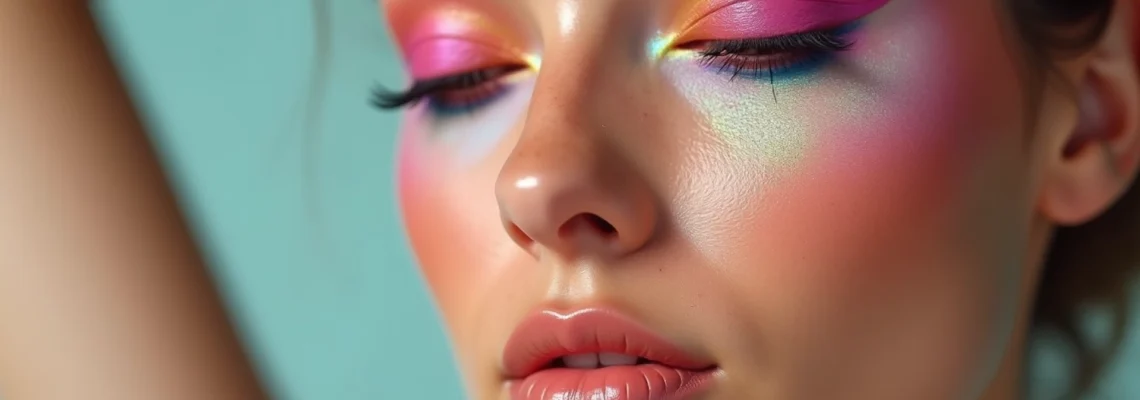
The beauty landscape undergoes a dramatic transformation in 2025, where technological innovation meets artistic expression in unprecedented ways. This year marks a pivotal shift from minimalist aesthetics to bold, experimental approaches that celebrate individuality and creative freedom. From revolutionary colour theory applications to microbiome-friendly formulations, the makeup industry embraces both scientific advancement and artistic rebellion.
Professional makeup artists and beauty enthusiasts alike are witnessing the emergence of sophisticated techniques that blur the lines between traditional cosmetics and high-tech beauty solutions. The integration of artificial intelligence, sustainable packaging innovations, and gender-neutral formulations reflects a more conscious and inclusive approach to beauty consumption. These developments represent not just fleeting trends but fundamental changes in how society perceives and applies makeup in daily life.
Revolutionary colour theory applications in contemporary makeup artistry
The application of colour theory in makeup artistry reaches new heights of sophistication in 2025, moving beyond basic complementary colour schemes to embrace complex chromatic relationships. Professional makeup artists now utilise advanced understanding of colour psychology, skin undertones, and lighting conditions to create looks that appear fundamentally different under various environmental conditions. This scientific approach to colour selection transforms how you perceive and apply makeup, making every application a deliberate artistic choice rather than intuitive guesswork.
Modern colour theory encompasses not just the traditional colour wheel but incorporates digital colour spaces, LED lighting considerations, and photographic colour reproduction. The result is makeup that photographs beautifully under artificial lighting whilst maintaining its vibrancy in natural daylight. This dual-purpose approach becomes essential as social media continues to influence beauty standards and application techniques.
Dopamine dressing psychology through vibrant eyeshadow palettes
The dopamine dressing movement extends beyond fashion into makeup, with vibrant eyeshadow palettes designed to trigger positive emotional responses. Neurological research demonstrates that specific colour combinations can influence mood and confidence levels, leading cosmetic companies to formulate palettes based on psychological colour theory rather than purely aesthetic considerations.
Bright coral, electric blue, and sunset orange combinations dominate eyeshadow releases, each carefully calibrated to enhance natural serotonin production. These scientifically-informed colour choices help you achieve not just visual impact but genuine mood enhancement throughout the day. The psychological benefits of wearing vibrant colours become particularly relevant during winter months when seasonal affective patterns typically emerge.
Chromatic harmonisation techniques using urban decay vice collection
Professional chromatic harmonisation involves the strategic placement of complementary and analogous colours across facial features to create visual cohesion. The Urban Decay Vice Collection exemplifies this approach, offering pre-selected colour combinations that work together mathematically to create balanced, visually pleasing looks regardless of skill level.
These harmonisation techniques consider factors such as eye colour, skin tone, and hair colour to create a unified aesthetic. The mathematical precision behind these colour relationships means that even unconventional combinations can appear harmonious when applied according to established chromatic principles. This approach democratises advanced colour theory, making professional-level results accessible to everyday makeup enthusiasts.
Pantone 2025 colour integration in professional makeup lines
The integration of Pantone 2025’s colour forecast into professional makeup lines represents a sophisticated approach to trend prediction and product development. Mocha Mousse , the colour of the year, influences everything from foundation undertones to eyeshadow base colours, creating a cohesive aesthetic across multiple product categories.
Professional makeup lines now incorporate Pantone colour matching systems to ensure accuracy and consistency across different product formulations. This technical precision allows for seamless colour coordination between lipsticks, blushes, and eyeshadows, creating opportunities for monochromatic looks that maintain visual interest through texture variation rather than colour contrast.
Gradient blending methods for Multi-Dimensional eye looks
Advanced gradient blending techniques create multi-dimensional eye looks that appear to shift and change based on viewing angle and lighting conditions. These methods involve the strategic layering of colours with different undertones and finishes to create depth and movement within a single eyeshadow application.
The technique requires understanding how different pigment types interact when layered, considering factors such as particle size, opacity, and reflective properties. Professional artists use specific brush techniques and blending patterns to achieve seamless colour transitions that appear almost airbrushed in their execution. These methods transform traditional eyeshadow application into a form of optical illusion, creating the appearance of larger, more prominent eyes through strategic colour placement.
Advanced skin preparation technologies and Microbiome-Friendly formulations
Skin preparation undergoes a technological revolution in 2025, with advanced formulations that work at the cellular level to create optimal conditions for makeup application. The understanding of the skin microbiome’s role in complexion health leads to the development of makeup products that actually benefit skin health rather than merely covering imperfections. This paradigm shift represents a fundamental change in how the beauty industry approaches the relationship between skincare and cosmetics.
The integration of biotechnology into makeup formulations allows for products that adapt to individual skin conditions throughout the day. Smart foundations now contain ingredients that respond to environmental factors such as humidity, temperature, and pollution levels, adjusting their coverage and finish accordingly. This adaptive approach ensures optimal appearance regardless of changing conditions throughout the day.
Peptide-infused primers from charlotte tilbury magic cream range
Peptide-infused primers represent the convergence of skincare science and makeup technology, offering immediate cosmetic benefits alongside long-term skin improvement. The Charlotte Tilbury Magic Cream range exemplifies this approach, incorporating multiple peptide complexes that stimulate collagen production whilst providing an ideal base for makeup application.
These advanced primers contain signalling peptides that communicate with skin cells to promote healing and regeneration, effectively treating the skin whilst creating a flawless makeup base. The dual-action formulation means that regular use contributes to visible skin improvement over time, making the primer an investment in both immediate appearance and long-term skin health.
Blue light protection ingredients in tinted moisturisers
The integration of blue light protection into tinted moisturisers addresses the increasing concern about digital device exposure and its effects on skin health. These formulations incorporate specialised filters and antioxidants that neutralise high-energy visible light whilst providing natural-looking coverage and hydration.
Advanced blue light protection goes beyond simple UV filters, incorporating ingredients like lutein, zeaxanthin, and specialised iron oxides that specifically target the 400-450 nanometre wavelength range. This targeted protection becomes increasingly important as screen time continues to increase, offering a proactive approach to preventing premature ageing caused by digital device exposure.
Hyaluronic acid layering protocols for extended wear foundation
Sophisticated hyaluronic acid layering protocols enhance foundation longevity whilst maintaining skin hydration throughout extended wear periods. These protocols involve the application of different molecular weights of hyaluronic acid in specific sequences to create a moisture gradient that supports makeup adhesion and prevents dehydration.
The layering technique utilises low, medium, and high molecular weight hyaluronic acid molecules applied in precise order to create a hydration matrix within the skin. This scientific approach to skin preparation ensures that foundation maintains its initial appearance for 12-16 hours without requiring touch-ups or setting sprays. The result is makeup that actually improves in appearance throughout the day as the hyaluronic acid continues to attract moisture from the environment.
Probiotic skincare integration with makeup application sequences
The integration of probiotic skincare into makeup application sequences represents a holistic approach to complexion enhancement that supports skin health at the microbiome level. This integration requires careful consideration of ingredient compatibility and application timing to ensure that beneficial bacteria remain active whilst providing optimal makeup adherence.
Probiotic integration involves the use of prebiotic ingredients in primers and foundations that feed beneficial skin bacteria, promoting a healthy skin barrier that naturally improves makeup application. This approach transforms the daily makeup routine into a skin health ritual that supports long-term complexion improvement whilst providing immediate cosmetic benefits.
Sustainable beauty innovation and Zero-Waste packaging solutions
Sustainability becomes the driving force behind beauty innovation in 2025, with brands investing heavily in zero-waste packaging solutions and environmentally conscious formulations. The industry responds to increasing consumer awareness about environmental impact by developing packaging alternatives that maintain product integrity whilst eliminating unnecessary waste. Refillable compacts, biodegradable packaging materials, and concentrated formulations represent just the beginning of this comprehensive sustainability transformation.
The shift towards sustainable beauty extends beyond packaging to encompass ingredient sourcing, manufacturing processes, and product lifecycle management. Circular beauty emerges as a concept where products are designed from inception with end-of-life considerations, ensuring that every component can be recycled, composted, or repurposed. This holistic approach to sustainability influences everything from ingredient selection to retail packaging design.
Innovative packaging solutions include water-soluble pods for single-use products, bamboo compacts with replaceable inserts, and packaging made from ocean plastic waste. These alternatives maintain the luxury feel and protective properties that consumers expect whilst dramatically reducing environmental impact. The challenge lies in balancing sustainability goals with product performance and shelf life requirements, leading to breakthrough innovations in packaging materials and preservation technologies.
Consumer education plays a crucial role in the success of sustainable beauty initiatives, with brands investing in transparency and traceability systems that allow customers to track the environmental impact of their purchases. Carbon-neutral beauty becomes a achievable goal through offset programmes, renewable energy use in manufacturing, and sustainable ingredient sourcing partnerships with ethical suppliers worldwide.
Digital makeup technologies and augmented reality integration
Digital makeup technologies revolutionise the beauty shopping experience in 2025, with augmented reality applications becoming sophisticated enough to accurately predict how products will appear on individual skin tones and facial features. These technologies eliminate much of the guesswork involved in online beauty shopping, reducing returns and increasing customer satisfaction through precise virtual try-on experiences. The integration of artificial intelligence with AR technology creates personalised recommendations based on facial analysis, skin tone matching, and individual preference learning.
The advancement of digital makeup technologies extends beyond simple colour matching to include texture simulation, lighting condition modelling, and long-term wear prediction. Advanced algorithms can now predict how a particular foundation will appear after several hours of wear, accounting for individual skin characteristics such as oil production, pore size, and natural skin texture variations.
L’oréal ModiFace virtual Try-On algorithm development
L’Oréal’s ModiFace technology represents the pinnacle of virtual try-on sophistication, utilising machine learning algorithms trained on millions of facial images to provide accurate real-time makeup simulation. The system analyses facial geometry, skin texture, and lighting conditions to render realistic makeup applications that account for individual facial features and skin characteristics.
The algorithm continuously improves through user interaction data, learning to better predict colour payoff, texture appearance, and blending characteristics across different skin types. This continuous improvement means that virtual try-on experiences become more accurate over time, eventually rivalling in-person testing for accuracy and reliability.
Ai-powered shade matching through perfect365 applications
AI-powered shade matching technology eliminates the frustration of incorrect foundation selection by analysing skin undertones, surface tone, and individual colour characteristics through smartphone cameras. Perfect365’s advanced algorithms consider factors invisible to the human eye, including subtle colour variations across different facial areas and the influence of ambient lighting on colour perception.
The sophisticated analysis extends beyond simple colour matching to include skin texture analysis, which influences how different foundation formulations will appear and perform on individual skin types. This comprehensive approach ensures that shade recommendations account for both colour accuracy and optimal formulation compatibility with your specific skin characteristics.
Smart mirror technology implementation in retail environments
Smart mirror technology transforms retail beauty environments by providing personalised consultation experiences that combine product testing with educational content and expert recommendations. These mirrors utilise facial recognition technology to remember previous visits and preferences whilst offering real-time skin analysis and product suggestions based on detected skin concerns.
The integration of smart mirrors with inventory systems allows for immediate product availability confirmation and seamless purchase processes.
The future of beauty retail lies in creating personalised, technology-enhanced experiences that combine the convenience of online shopping with the tactile benefits of in-person testing.
These systems also collect valuable data about consumer preferences and product performance, informing future product development and inventory decisions.
Gender-neutral cosmetics and inclusive shade range expansion
The beauty industry embraces genuine inclusivity in 2025 through the development of gender-neutral cosmetics and comprehensive shade range expansion that addresses the full spectrum of human skin tones. This movement goes beyond marketing rhetoric to encompass fundamental changes in product formulation, packaging design, and brand messaging that reflect the diverse reality of modern beauty consumers. Universal beauty becomes the standard rather than the exception, with brands recognising that effective cosmetics should work for everyone regardless of gender identity, age, or ethnic background.
Gender-neutral product development requires rethinking traditional beauty categories and formulation approaches to create products that provide optimal results across different skin types and aesthetic preferences. This involves developing colour ranges that complement various undertones, creating packaging that appeals to diverse consumers, and formulating textures that work effectively on different skin characteristics without reinforcing traditional gender stereotypes.
Inclusive shade range expansion extends far beyond simply offering more foundation colours to encompass the entire colour cosmetics spectrum. Brands now develop lipstick ranges with undertones that complement deeper skin tones, create blush formulations that show up beautifully on darker complexions, and design eyeshadow palettes that enhance rather than clash with natural melanin variations. This comprehensive approach ensures that every product category offers meaningful options for all consumers.
The technical challenges of inclusive formulation include developing pigment technologies that maintain colour integrity across different skin tones, creating packaging that protects product integrity whilst remaining sustainable, and establishing colour-matching systems that account for subtle undertone variations often overlooked by traditional beauty standards.
True inclusivity in beauty means every consumer should be able to find products that make them feel confident and beautiful, regardless of their individual characteristics or identity expression.
Professional makeup techniques inspired by K-Beauty glass skin methods
K-Beauty glass skin methods influence professional makeup techniques worldwide in 2025, introducing sophisticated layering approaches that create luminous, poreless-looking skin without heavy coverage. These techniques emphasise skin preparation, strategic highlighting, and subtle texture manipulation to achieve a naturally radiant appearance that appears to glow from within. The methodology involves multiple thin layers of different formulations rather than single heavy applications, creating buildable coverage that maintains skin’s natural movement and expression.
The glass skin approach requires understanding how different product textures interact when layered, utilising the natural oils in skin to create seamless blending between products. Professional artists adapt these techniques for various skin types and concerns, modifying application methods and product selection to achieve the characteristic luminous finish regardless of individual skin characteristics. This personalised approach ensures that glass skin techniques remain accessible to diverse skin types rather than being limited to naturally clear complexions.
Advanced glass skin techniques incorporate strategic colour correction using colour theory principles to neutralise discolouration whilst maintaining transparency. This involves using complementary colours in minimal quantities to cancel out redness, sallowness, or dark circles without creating visible colour correction patches. The result is skin that appears naturally flawless rather than obviously corrected.
The influence of glass skin methods extends beyond foundation application to encompass highlighting techniques that utilise multiple types of luminosity to create dimensional radiance. Layered luminosity involves combining matte bases with strategic pearl, shimmer, and glitter placement to create complex light reflection patterns that change based on viewing angle and ambient lighting conditions. This sophisticated approach to highlighting creates the illusion of perfect skin texture whilst maintaining a natural, healthy appearance that photographs beautifully under various lighting conditions.