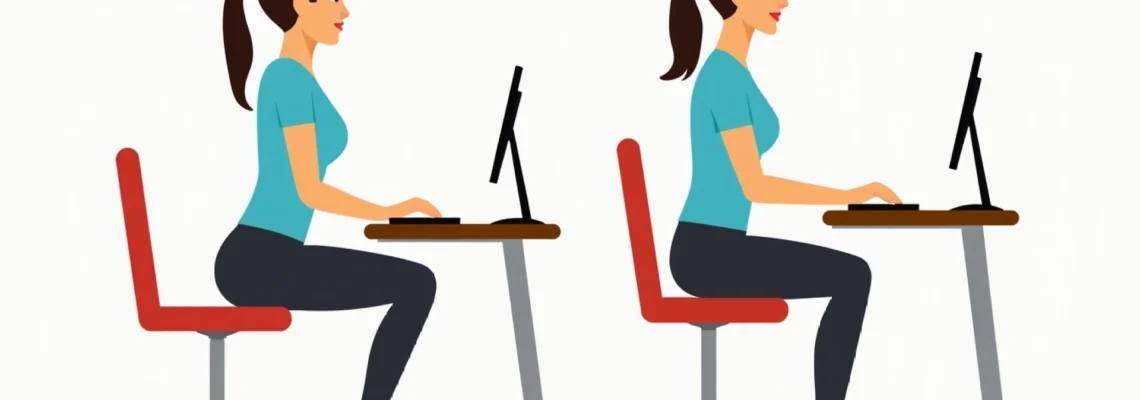
Modern lifestyles have created an epidemic of postural dysfunction that extends far beyond mere aesthetic concerns. Poor posture significantly contributes to chronic back pain, affecting approximately 629 million people globally according to the World Health Organization. The human spine, designed for movement and dynamic loading, suffers when subjected to prolonged static positions and inadequate muscular support. Understanding the biomechanical foundations of proper spinal alignment and implementing targeted corrective exercises can dramatically reduce pain whilst enhancing overall quality of life. The key lies in addressing both the structural imbalances that develop over time and the muscular weaknesses that perpetuate these dysfunctional patterns.
Understanding postural dysfunction and spinal biomechanics
The human spine maintains its natural curves through a delicate balance of muscular tension and joint mobility. When this equilibrium becomes disrupted, compensatory patterns emerge that place excessive stress on specific structures. These adaptations often begin subtly but progressively worsen without intervention, leading to pain, reduced function, and increased injury risk. Postural dysfunction represents a complex interplay of muscular imbalances, joint restrictions, and movement compensations that collectively alter optimal spinal alignment.
Research indicates that postural abnormalities affect up to 85% of adults in developed countries, with the prevalence increasing significantly among office workers and individuals who spend extended periods using electronic devices. The economic impact of back pain related to postural dysfunction exceeds £200 billion annually in healthcare costs and lost productivity. Understanding the specific patterns of dysfunction enables targeted intervention strategies that address root causes rather than merely treating symptoms.
Forward head posture and cervical lordosis assessment
Forward head posture represents one of the most common postural deviations in contemporary society. This condition involves anterior positioning of the head relative to the thorax, typically accompanied by increased cervical extension and reduced cervical lordosis. The average human head weighs approximately 4.5-5.4 kilograms, but for every inch the head moves forward, the effective weight on the cervical spine doubles, creating enormous stress on the posterior neck muscles and cervical joints.
The assessment of forward head posture involves measuring the craniovertebral angle, with values below 50 degrees indicating significant deviation from normal. This condition frequently accompanies thoracic kyphosis and contributes to headaches, neck pain, and shoulder impingement syndromes. The suboccipital muscles become chronically shortened whilst the deep cervical flexors weaken, creating a self-perpetuating cycle of dysfunction.
Thoracic kyphosis and upper crossed syndrome patterns
Excessive thoracic kyphosis, commonly termed “rounded shoulders,” results from prolonged flexed positioning and muscular imbalances characteristic of upper crossed syndrome. This pattern involves tightness in the upper trapezius, levator scapulae, and pectoralis muscles, combined with weakness in the rhomboids, middle trapezius, and deep cervical flexors. The thoracic spine loses its ability to extend effectively, compromising respiratory function and shoulder blade mechanics.
Upper crossed syndrome creates a characteristic hunched appearance that extends beyond cosmetic concerns. The altered thoracic curve increases compression forces on the anterior vertebral bodies and intervertebral discs whilst placing excessive tension on the posterior ligamentous structures. This imbalance often correlates with reduced lung capacity, as the ribcage becomes fixed in an expiratory position, limiting diaphragmatic excursion and breathing efficiency.
Lumbar lordosis and lower crossed syndrome identification
Lower crossed syndrome affects the lumbopelvic region and represents a significant contributor to lower back pain. This pattern involves tight hip flexors and erector spinae muscles combined with weak gluteus maximus and deep abdominal muscles. The result is often excessive lumbar lordosis, anterior pelvic tilt, and compromised lumbopelvic stability during functional movements.
The identification of lower crossed syndrome requires assessment of hip flexor length, glute activation patterns, and core stability. Thomas test positioning reveals hip flexor tightness when the thigh cannot rest flat on the examination table, whilst prone hip extension testing demonstrates gluteal weakness when the erector spinae activate before the gluteus maximus. These findings directly correlate with increased lumbar spine stress and reduced shock absorption during weight-bearing activities.
Pelvic tilt variations and their impact on spinal alignment
Pelvic positioning serves as the foundation for optimal spinal alignment, with variations in pelvic tilt creating cascading effects throughout the kinetic chain. Anterior pelvic tilt increases lumbar lordosis and places the hip flexors in a shortened position, whilst posterior pelvic tilt reduces lumbar lordosis and often accompanies thoracic kyphosis. Lateral pelvic tilts create compensatory scoliotic curves and uneven loading patterns that predispose to injury.
The assessment of pelvic alignment involves multiple landmarks and measurements, including the anterior superior iliac spine to posterior superior iliac spine relationship. Normal pelvic tilt ranges from 7-15 degrees anteriorly, with deviations beyond this range indicating dysfunction. These alterations affect not only spinal mechanics but also hip joint function, knee alignment, and even foot positioning during weight-bearing activities.
Core strengthening protocols for spinal stabilisation
Effective spinal stabilisation requires coordinated activation of the deep core muscles, including the transverse abdominis, multifidus, pelvic floor, and diaphragm. These muscles function as an internal corset that maintains spinal neutral positioning during movement and load transfer. Research demonstrates that individuals with chronic back pain exhibit delayed or reduced activation of these stabilising muscles, creating vulnerability to injury and perpetuating pain cycles.
Modern core strengthening protocols emphasise motor control and endurance rather than maximal strength development. The focus shifts from superficial “six-pack” muscles to the deeper stabilisers that provide intersegmental control and maintain spinal curves during functional activities. This approach requires precise exercise execution with emphasis on quality of movement rather than quantity of repetitions.
Transverse abdominis activation through dead bug progressions
The transverse abdominis represents the deepest abdominal muscle and functions as the body’s natural weight belt. Dead bug exercises specifically target this muscle whilst challenging spinal stability in multiple planes of movement. The exercise begins in supine position with hips and knees flexed to 90 degrees, arms extended toward the ceiling. Proper execution requires maintaining neutral lumbar spine position whilst extending opposite arm and leg combinations.
Progressive variations include single-limb movements, resistance band additions, and unstable surface challenges. The key to effectiveness lies in maintaining spinal neutral positioning throughout the movement, with particular attention to preventing lumbar extension or rotation. Proper breathing patterns enhance transverse abdominis activation, with exhalation accompanying the challenging phase of movement whilst maintaining deep core engagement.
Multifidus strengthening with bird dog exercise variations
The multifidus muscles provide segmental stability throughout the lumbar spine and demonstrate specific atrophy patterns in individuals with chronic back pain. Bird dog exercises effectively target these deep stabilisers whilst incorporating proprioceptive challenges that enhance motor control. The exercise commences in quadruped position with neutral spinal alignment, progressing to opposite arm and leg extensions with emphasis on maintaining level pelvis and stable trunk.
Advanced progressions include unstable surface variations, resistance applications, and dynamic movement patterns that challenge stability in multiple directions. The multifidus muscles respond particularly well to low-load, high-repetition exercises that emphasise endurance and motor control rather than maximal strength development. Consistent practice of bird dog variations can restore normal multifidus activation patterns and reduce recurrence rates of lower back pain episodes.
Diaphragmatic breathing integration with pelvic floor engagement
The diaphragm functions as both a respiratory muscle and a core stabiliser, working in coordination with the pelvic floor to maintain intra-abdominal pressure and spinal stability. Diaphragmatic breathing exercises enhance this coordination whilst promoting relaxation and reducing muscular tension throughout the trunk. Proper technique involves lateral rib expansion during inspiration whilst maintaining gentle pelvic floor engagement.
Integration of breathing with movement patterns enhances the effectiveness of core strengthening exercises. The breath-hold technique during challenging movements can compromise spinal stability and increase blood pressure, making coordinated breathing essential for safe and effective exercise execution. Progressive training develops the ability to maintain core stability whilst breathing normally during functional activities, representing a crucial component of back pain prevention strategies.
Mcgill big 3 protocol: Curl-Up, side plank, and modified bird dog
Professor Stuart McGill’s research identified three specific exercises that optimally challenge spinal stability whilst minimising disc compression forces. The McGill Big 3 protocol includes the curl-up for anterior core strength, side plank for lateral stability, and modified bird dog for posterior chain activation. This combination addresses all planes of spinal stability whilst avoiding problematic flexion-extension movements that can exacerbate disc pathology.
The curl-up differs from traditional sit-ups by limiting spinal flexion to approximately 30 degrees, targeting the rectus abdominis whilst protecting the lumbar spine. Side planks progress from knee support to full extension with emphasis on maintaining straight body alignment. The modified bird dog incorporates brief holds with focus on quality rather than duration, typically progressing from 7-8 second holds to longer durations as stability improves.
Targeted postural correction exercises
Correcting established postural patterns requires specific exercises that address both muscular imbalances and movement dysfunction. These interventions focus on lengthening shortened structures, strengthening weakened muscles, and re-educating optimal movement patterns. The process demands patience and consistency, as postural adaptations develop over months or years and require sustained effort to modify effectively.
Successful postural correction integrates mobility work, strength training, and motor re-education into comprehensive programmes tailored to individual dysfunction patterns. The exercises must address not only the visible postural deviations but also the underlying compensations and adaptations that maintain these dysfunctional patterns. Progressive overload principles apply to postural exercises, with gradual increases in difficulty and duration as improvements occur.
Chin tuck exercise for suboccipital muscle strengthening
The chin tuck exercise directly addresses forward head posture by strengthening the deep cervical flexors whilst stretching the suboccipital muscles. This simple yet effective movement involves drawing the chin back toward the neck whilst maintaining eye level positioning. The exercise can be performed against wall support initially, progressing to unsupported positions as strength and awareness improve.
Proper execution requires avoiding excessive neck flexion or extension, focusing instead on creating length through the posterior neck whilst activating the deep cervical flexors. Hold positions typically range from 5-10 seconds with emphasis on quality rather than duration. Regular practice throughout the day helps counteract the effects of prolonged forward head positioning associated with computer work and mobile device usage.
Wall angel movements for thoracic extension mobility
Wall angel exercises improve thoracic extension mobility whilst strengthening the posterior shoulder and upper back muscles. The exercise begins with back against a wall, arms positioned in a goalpost formation with elbows and wrists maintaining wall contact. The movement involves sliding the arms up and down the wall whilst preserving contact points and avoiding compensation through lumbar extension.
This exercise challenges both mobility and stability, as many individuals cannot maintain proper wall contact due to thoracic stiffness and weakness in the middle trapezius and rhomboid muscles. Progressive modifications include varying arm positions and adding resistance bands to increase strengthening demands. Consistent practice helps restore normal thoracic extension and reverses the rounded shoulder posture common in desk workers.
Prone Y-T-W raises for rhomboid and lower trapezius activation
Prone Y-T-W exercises specifically target the often-weakened posterior shoulder and upper back muscles whilst promoting scapular stability and control. The exercise series involves lying face-down and lifting the arms into Y, T, and W formations with thumbs pointing upward. Each position targets different aspects of the posterior shoulder complex whilst challenging scapular retraction and depression patterns.
The Y position emphasises lower trapezius activation, the T position targets middle trapezius and rhomboids, whilst the W position focuses on posterior deltoid and external rotator strength. Light resistance or bodyweight provides sufficient challenge for most individuals, with emphasis on controlled movements and proper scapular mechanics. These exercises prove particularly effective for addressing upper crossed syndrome patterns and improving overhead movement quality.
Hip flexor stretching through couch stretch and thomas test position
Hip flexor tightness significantly contributes to lumbar lordosis and lower back pain, making targeted stretching essential for postural correction. The couch stretch provides an aggressive hip flexor stretch by positioning the rear foot elevated whilst lunging forward with the opposite leg. This position specifically targets the psoas and rectus femoris muscles that commonly become shortened in individuals with anterior pelvic tilt.
The Thomas test position offers a more controlled hip flexor stretch that can be performed on a treatment table or firm surface. This position involves lying supine with one leg pulled to the chest whilst the opposite leg hangs off the edge, creating a stretch through the hip flexors of the hanging leg. Both techniques require sustained holds of 30-60 seconds with multiple repetitions throughout the day for optimal effectiveness.
Ergonomic workstation setup and movement integration
Ergonomic workstation design plays a crucial role in preventing postural dysfunction and reducing back pain risk. Proper setup addresses monitor height, keyboard positioning, chair selection, and lighting to minimise postural stress during prolonged sitting. Research indicates that even with optimal ergonomic setup, movement variation remains essential for maintaining spinal health and preventing muscular fatigue.
The concept of dynamic sitting has gained prominence as static postures, even optimal ones, create problems when maintained for extended periods. Movement integration involves incorporating brief exercise breaks, position changes, and micro-movements throughout the workday. Studies demonstrate that individuals who change positions every 30 minutes experience significantly less back pain and muscular tension compared to those who maintain static postures.
Modern workplace interventions include sit-stand desks, stability balls, and reminder systems that prompt regular movement breaks. However, the effectiveness of these tools depends on proper implementation and user education. Simply providing ergonomic equipment without instruction on proper usage often fails to achieve desired outcomes. The integration of postural exercises during work breaks proves more effective than equipment alone in preventing back pain and improving spinal health.
Research consistently demonstrates that combining ergonomic interventions with regular movement and targeted exercises reduces workplace-related back pain by up to 60% compared to ergonomic modifications alone.
Workplace movement strategies should include both micro-breaks for postural relief and longer breaks for more comprehensive exercise routines. Micro-breaks involve simple movements such as shoulder rolls, neck stretches, and spinal rotations performed every 20-30 minutes. Longer breaks allow for more complete exercise sequences that address specific postural deficits and muscular imbalances accumulated during work activities.
Progressive exercise protocols and assessment markers
Successful back pain prevention requires systematic progression of exercise difficulty and intensity based on individual capability and adaptation. Progressive protocols begin with basic movement patterns and motor control exercises, advancing to more challenging stability and strength requirements as competency develops. The progression should address both local muscular endurance and global movement patterns that support optimal spinal function.
Assessment markers help determine appropriate exercise progression and monitor improvement over time. These include postural measurements, functional movement screening results, pain levels, and performance benchmarks for specific exercises. Objective tracking provides motivation and ensures that exercise programmes remain appropriately challenging without exceeding individual capacity or creating setback risk.
Clinical studies show that individuals who follow structured progressive exercise protocols experience 40% greater improvement in back pain and function compared to those using static exercise routines.
Key performance indicators include hold times for stability exercises, range of motion measurements, and strength assessments for targeted muscle groups. Pain levels should consistently decrease whilst functional capacity improves, indicating successful intervention. Plateaus in progress may indicate the need for programme modification or professional consultation to address underlying issues not responsive to standard interventions.
Progressive protocols typically span 8-12 weeks for initial adaptation, with ongoing maintenance programmes essential for sustained benefits. The transition from corrective exercises to maintenance activities should occur gradually, ensuring that improvements gained during the intensive phase are preserved through continued activity. Long-term success requires integration of postural awareness and exercise habits into daily routines rather than viewing them as temporary interventions.
Evidence-based prevention strategies for chronic back pain
Chronic back pain prevention requires a multifaceted approach that addresses biomechanical, psychological, and lifestyle factors contributing to pain development and persistence. Evidence-based strategies focus on maintaining spinal mobility, supporting muscular balance
, and promoting lifestyle modifications that reduce back pain risk factors. Meta-analyses demonstrate that comprehensive prevention programmes reduce chronic back pain incidence by up to 45% compared to single-intervention approaches. The most effective strategies combine exercise, education, and environmental modifications tailored to individual risk profiles and occupational demands.
Workplace wellness programmes incorporating regular exercise, ergonomic training, and stress management show particularly promising results in reducing back pain prevalence among office workers. Studies indicate that employees participating in comprehensive prevention programmes experience 60% fewer back pain episodes and demonstrate significantly improved job satisfaction and productivity. These programmes typically include daily movement breaks, targeted strengthening exercises, and postural awareness training integrated into the work environment.
Lifestyle modifications represent equally important prevention strategies that address broader health factors contributing to back pain development. Maintaining healthy body weight reduces spinal loading forces, whilst regular cardiovascular exercise promotes tissue healing and reduces inflammation. Sleep quality improvements support tissue repair processes and pain modulation, making sleep hygiene an essential component of prevention strategies. Stress management techniques, including mindfulness and relaxation training, help break pain-tension cycles that perpetuate chronic symptoms.
Longitudinal studies following individuals for 5+ years demonstrate that those implementing comprehensive prevention strategies maintain 75% lower rates of chronic back pain development compared to control groups receiving standard care advice alone.
Nutritional considerations also play a role in back pain prevention, with anti-inflammatory dietary patterns supporting tissue health and reducing systemic inflammation. Adequate protein intake supports muscle protein synthesis essential for maintaining strength and endurance in spinal stabilising muscles. Hydration status affects disc health, as intervertebral discs rely on fluid exchange for nutrient delivery and waste removal. These factors, whilst often overlooked, contribute significantly to long-term spinal health and pain prevention.
The integration of technology in prevention strategies shows increasing promise, with wearable devices providing real-time postural feedback and movement reminders. Smartphone applications offer exercise guidance, progress tracking, and educational resources that support adherence to prevention programmes. However, technology serves best as a supplement to, rather than replacement for, professional guidance and structured exercise programmes. The human element remains crucial for motivation, programme modification, and addressing individual barriers to success.
Early intervention strategies prove particularly effective in preventing acute back pain episodes from progressing to chronic conditions. Research demonstrates that individuals receiving targeted intervention within the first six weeks of back pain onset show dramatically better long-term outcomes compared to those receiving delayed treatment. This emphasises the importance of recognition and prompt action when initial symptoms develop, rather than adopting a “wait and see” approach that may allow dysfunction patterns to become established.
Community-based prevention programmes extend the reach of evidence-based strategies beyond clinical and workplace settings. These initiatives typically involve group exercise classes, educational workshops, and peer support networks that make prevention strategies accessible to broader populations. The social support component proves particularly valuable, as individuals participating in group-based programmes demonstrate higher adherence rates and better long-term outcomes compared to those pursuing isolated prevention efforts.
Long-term success in back pain prevention requires viewing these strategies not as temporary interventions but as permanent lifestyle adaptations. The most effective programmes emphasise sustainable behaviour changes that integrate seamlessly into daily routines rather than requiring significant time investments or complex equipment. This approach acknowledges that prevention represents an ongoing process rather than a destination, with continued attention to spinal health essential for maintaining benefits achieved through initial intervention efforts. The evidence overwhelmingly supports that consistent application of these evidence-based strategies can dramatically reduce the global burden of back pain whilst improving quality of life for millions of individuals worldwide.