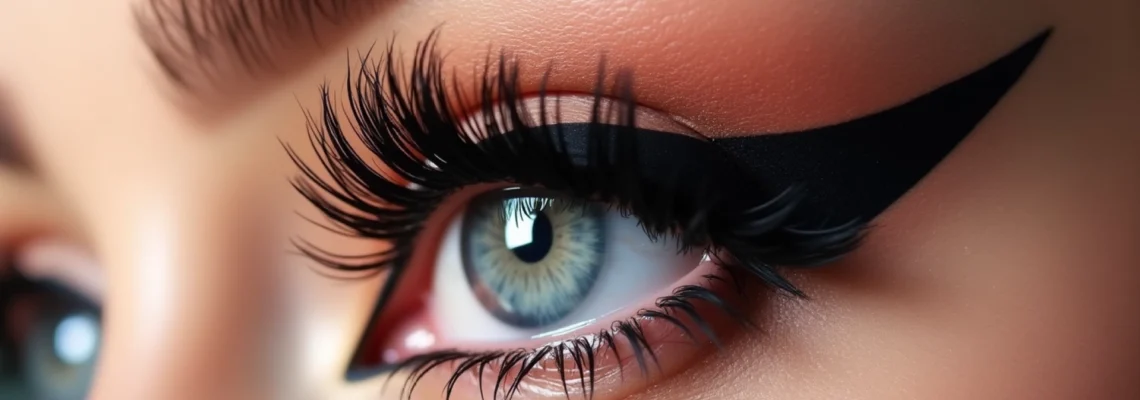
The art of creating mesmerising eyes through strategic eyeliner application has captivated beauty enthusiasts for decades. From ancient Egyptian pharaohs to modern-day celebrities, the power of perfectly applied liner remains unmatched in its ability to transform facial features and create an unforgettable gaze. Mastering the intricacies of eyeliner application involves understanding not only technical precision but also colour theory, eye anatomy, and formula selection. Whether you seek the dramatic sophistication of a winged liner or the sultry allure of smudged kohl, achieving that coveted star-worthy gaze requires knowledge of professional techniques that makeup artists have perfected over years of practice. The secret lies in combining the right methods with quality products and understanding how different approaches complement various eye shapes and skin tones.
Precision application techniques for classic winged eyeliner
Creating flawless winged eyeliner demands more than steady hands and quality products. Professional makeup artists employ various methods to achieve sharp, symmetrical wings that enhance eye shape while creating that coveted lifted appearance. Understanding these techniques transforms amateur attempts into professional-looking results that rival celebrity makeup applications.
Tape method for sharp wing geometry
The tape method revolutionises wing creation by providing a foolproof guide for achieving razor-sharp edges. Position a piece of clear tape from the lower lash line towards the tail of the eyebrow, creating the desired angle. Apply eyeliner above the tape edge, then carefully remove the tape while the product remains slightly wet. This technique ensures both eyes match perfectly and eliminates the common problem of uneven wing shapes. Professional tip : Use surgical tape or low-adhesive tape to prevent skin irritation and ensure clean removal without disturbing surrounding makeup.
Credit card edge technique for professional lines
Utilising a credit card or business card edge provides exceptional control when creating wings. Hold the card against the outer corner of your eye at your preferred angle, then trace along the edge with your eyeliner. This method works particularly well with gel or pencil formulations, allowing for precise control and consistent results. The rigid edge eliminates hand tremors and provides the stability needed for professional-looking lines.
Dot-to-dot connection method for symmetrical wings
Creating symmetrical wings becomes manageable through the dot-to-dot approach. Mark three points: one at the outer corner of your eye, one where you want the wing tip, and one connecting back to your upper lash line. Connect these dots with smooth strokes, then fill in the triangle created. This methodical approach ensures both eyes receive identical treatment and helps beginners achieve professional results. The technique particularly benefits those with asymmetrical eyes , as it allows for individual adjustments to create the illusion of perfect symmetry.
Spoon handle technique for curved wing perfection
The curved edge of a spoon handle creates beautifully shaped wings that follow the natural eye contour. Place the spoon’s curve against your closed eyelid, aligning it with your desired wing angle. Trace along the curve, then flip the spoon to create the lower wing edge. This method produces organically shaped wings that appear more natural than harsh geometric lines, making it ideal for everyday wear or softer evening looks.
Advanced colour theory for captivating eye enhancement
Understanding colour relationships elevates eyeliner application from basic definition to artistic enhancement that truly makes eyes captivating. Professional makeup artists rely on colour theory principles to select shades that not only complement but actively enhance natural eye colours, creating depth, brightness, and visual impact that photographs beautifully under various lighting conditions.
Complementary shade selection using the colour wheel principle
Complementary colours sit opposite each other on the colour wheel and create maximum visual impact when paired together. For brown eyes, navy blue and deep purple liners intensify warmth and create striking contrast. Green eyes appear more vibrant when paired with burgundy or plum shades, while blue eyes benefit from copper, bronze, or warm brown tones. This principle works by making each colour appear more saturated and intense through optical contrast. Understanding complementary relationships allows you to select liner colours that make your natural eye colour appear more vivid and noticeable.
Undertone matching for warm, cool, and neutral eye colours
Successful colour selection requires identifying the underlying tones within your eye colour. Warm brown eyes often contain golden or amber flecks and pair beautifully with bronze, copper, and warm purple shades. Cool brown eyes with grey or blue undertones look stunning with navy, charcoal, or cool plum liners. Hazel eyes, containing multiple colour elements, benefit from versatile shades like bronze or deep green that enhance various undertone combinations. This nuanced approach to colour selection ensures harmonious results that enhance rather than compete with natural colouration.
Chromatic intensity adjustment for Day-to-Evening transitions
Mastering intensity variation allows seamless transitions from professional daytime looks to captivating evening drama. Begin with neutral base colours like taupe or soft brown for daytime, then layer deeper, more saturated versions of the same colour family for evening enhancement. This technique maintains colour harmony while dramatically increasing visual impact. The key lies in building intensity gradually rather than switching to completely different colour families, ensuring a sophisticated transition that appears intentional rather than mismatched.
Monochromatic layering techniques for depth creation
Creating depth through monochromatic layering involves using multiple shades within the same colour family to achieve dimensional, professional-looking results. Start with the lightest shade closest to the inner corner, gradually deepening towards the outer corner. This technique works exceptionally well with brown, grey, or plum colour families, creating sophisticated gradients that enhance eye shape while maintaining colour cohesion. The result appears naturally dimensional and photographically stunning under various lighting conditions.
Professional eyeliner formula analysis and selection
Selecting the appropriate eyeliner formula significantly impacts both application ease and final results. Each formula type offers distinct advantages depending on the desired effect, application skill level, and longevity requirements. Understanding these differences enables informed decisions that enhance your technique and improve overall satisfaction with your eyeliner application.
Pencil eyeliners provide excellent control and blendability, making them ideal for beginners and those seeking softer, more natural effects. The waxy consistency allows for easy smudging and correction, while modern formulations offer impressive longevity. Waterproof pencil options combine ease of application with extended wear, though they require oil-based makeup removers for complete removal. Gel eyeliners offer intense pigmentation with smooth application, providing professional results with proper tools. Their creamy consistency makes them excellent for creating both precise lines and dramatic smoky effects.
Liquid eyeliners deliver unmatched precision and intensity, creating sharp, defined lines that photograph beautifully. Modern felt-tip applicators provide exceptional control, while brush-tip versions offer artistic flexibility for creating varying line weights. However, liquid formulas require steadier hands and offer less room for error during application. Hybrid formulas combine benefits from multiple categories, offering the precision of liquid with the blendability of gel, representing the latest advancement in eyeliner technology.
Consider your eye shape, skin type, and desired longevity when selecting formulas. Oily eyelids benefit from waterproof or long-wearing formulations, while dry skin types may prefer creamier, more moisturising options. The key lies in matching formula characteristics to your specific needs and skill level, ensuring optimal results that enhance rather than frustrate your makeup routine.
Celebrity-inspired star gaze recreations
Celebrity makeup looks provide endless inspiration for achieving that coveted star-quality gaze. These iconic styles have been perfected by professional makeup artists working under various lighting conditions and camera angles, ensuring their effectiveness in creating captivating eyes that translate beautifully in both photographs and real-life encounters.
Adele’s signature bold Cat-Eye technique
Adele’s dramatic cat-eye represents masterful wing construction that enhances her eye shape while creating timeless elegance. The technique involves extending the wing well beyond the natural eye corner, creating a lifted effect that appears both vintage and contemporary. Begin with a thick line along the upper lash line, then create an extended wing that follows the angle of the lower lash line upward. The key lies in maintaining consistent thickness throughout the line while ensuring the wing tip appears sharp and deliberate. This dramatic approach works particularly well for evening events and photography, creating eyes that command attention and convey confidence.
Taylor swift’s retro Pin-Up wing construction
Taylor Swift’s signature liner combines classic pin-up aesthetics with modern refinement, creating wings that appear both nostalgic and fresh. The technique emphasises moderate wing extension with perfect symmetry and smooth curves rather than sharp angles. Create wings that lift the outer corners without overwhelming the natural eye shape, maintaining a feminine softness that complements various face shapes. The application requires building the wing gradually, ensuring smooth transitions between the lash line and wing extension for seamless integration.
Brigitte bardot’s smudged kohl application method
Bardot’s sultry eye look relies on deliberately imperfect kohl application that creates effortless sophistication. Apply black or dark brown kohl generously to both upper and lower lash lines, then immediately smudge with a small brush or fingertip while the product remains workable. The goal involves creating soft, diffused edges that suggest natural shadow rather than precise lines. This technique particularly suits those who struggle with precise application, transforming potential mistakes into intentional artistic choices that convey effortless French glamour.
Amy winehouse’s dramatic Beehive-Era eye design
Amy Winehouse’s iconic eye makeup represents maximum drama through bold line work and exaggerated proportions. The technique involves creating thick, graphic lines that extend well beyond natural eye boundaries, paired with dramatic lower lash line emphasis. Apply liner generously to create bold, confident strokes that make a statement rather than subtle enhancement. The approach requires confidence and precision, as the dramatic proportions leave little room for tentative application. This style works exceptionally well for artistic photography and creative makeup applications where maximum impact takes precedence over subtlety.
Corrective eyeliner techniques for different eye shapes
Understanding how eyeliner application can correct or enhance various eye shapes enables customised approaches that maximise each individual’s natural beauty. Professional makeup artists assess eye anatomy before selecting techniques, ensuring that liner placement enhances rather than competes with natural features.
Hooded eyes benefit from thin lines that remain visible when eyes are open, with wings that extend slightly upward to create the illusion of lifted lids. Avoid thick lines on the mobile lid, as they disappear when eyes open and can make the hooding appear more pronounced. Focus liner application on the outer third of the eye, creating definition without overwhelming limited visible lid space. Waterproof formulas prove essential for hooded eyes, as the natural lid fold can cause regular formulas to transfer or smudge throughout the day.
Round eyes appear more almond-shaped through strategic liner placement that emphasises length rather than height. Extend wings horizontally rather than upward, creating the illusion of elongated eye shape. Apply liner slightly thicker at the outer corners while keeping the inner corners minimal, drawing attention outward and creating balance. Avoid white or nude liner on the waterline, as this can emphasise roundness rather than creating the desired elongation effect.
Small eyes benefit from light-reflecting liner shades on the waterline combined with precise upper lash line definition. Nude or champagne liner on the lower waterline creates the illusion of larger, more open eyes, while careful upper lash line application provides definition without overwhelming delicate proportions. Strategic highlight placement in the inner corners further enhances the enlarging effect, creating brightness that suggests naturally larger eye dimensions.
Deep-set eyes require techniques that bring them forward visually while avoiding shadows that can make them appear more recessed. Focus on lighter liner shades that reflect light, avoiding dark colours on the lid that can create additional shadowing. Concentrate definition on the outer corners and lash lines rather than the lid itself, ensuring that the natural eye depth becomes an asset rather than a challenge to overcome.
Long-wearing eyeliner longevity and Smudge-Proof methods
Achieving long-lasting eyeliner requires understanding both product properties and application techniques that maximise wear time while maintaining crisp, defined lines throughout extended wear periods. Professional makeup artists employ various methods to ensure liner remains fresh and defined from morning application through evening removal.
Proper eye preparation forms the foundation of long-wearing liner application. Begin with clean, oil-free skin around the eyes, removing any residual moisturiser or skincare products that might interfere with liner adhesion. Apply eyeshadow primer or setting powder to create a smooth, absorbent base that helps liner grip the skin more effectively. This preparatory step significantly extends wear time and prevents the common problems of fading, smudging, or transfer that plague poorly prepped applications.
Setting techniques ensure maximum longevity without compromising the initial application quality. Dust translucent powder over pencil liner using a small brush, then apply a matching eyeshadow shade over the powder to lock everything in place. For liquid liners, allow complete drying before applying additional products or opening eyes fully. This layering approach creates multiple barriers against wear, humidity, and natural skin oils that typically cause liner degradation.
Strategic touch-up planning acknowledges that even the best long-wearing techniques may require minor adjustments throughout extended wear periods. Carry a small liner pencil in the same shade for quick corrections, focusing on areas that typically wear first such as the inner corners or waterline. Understanding your individual wear patterns allows for proactive touch-ups before problems become noticeable, maintaining fresh appearance throughout the day. Consider the day’s activities when selecting formulas, choosing waterproof options for humid conditions or high-activity days while reserving standard formulas for typical indoor environments where they perform adequately with proper application techniques.